
USD/JPY surge: are new interventions on the horizon?
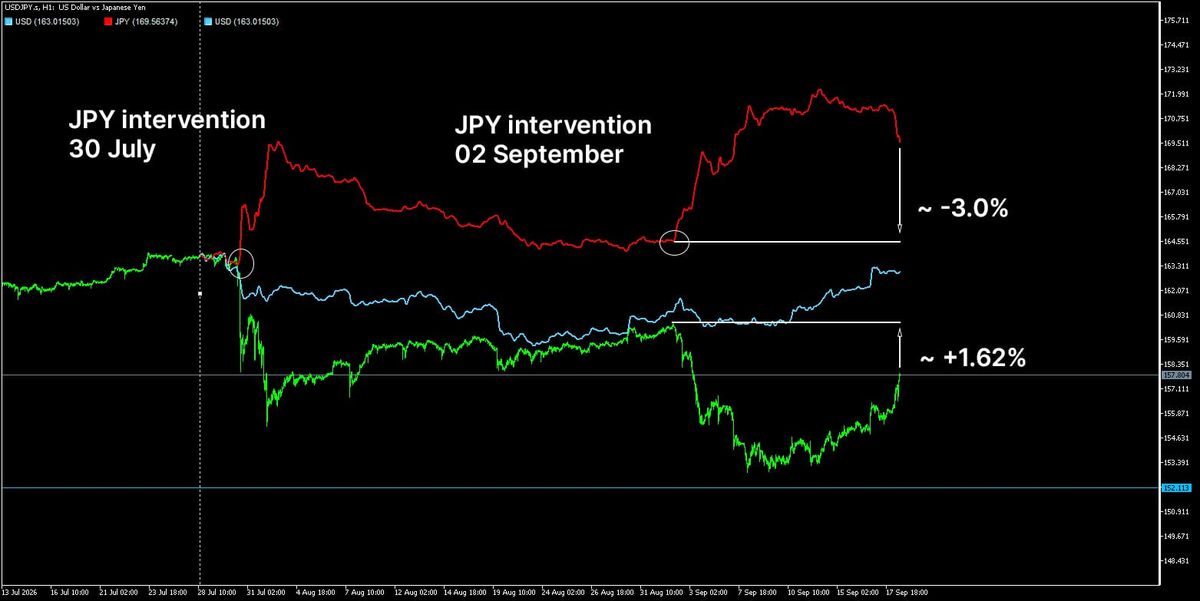
The sharp rally in the USD/JPY pair following the BoJ meeting and yesterday's Federal Reserve rate decision indicates a substantial capital flow into carry trades against the yen. An analysis of the yen index (SFA Index) shows that while USD/JPY is already approaching the "red zone," the yen itself still has room to depreciate before hitting the levels that triggered previous central bank interventions.
Key Drivers and Market Imbalance
- The Dual Effect: The rapid spike in USD/JPY stems from a synergy of two factors: the hawkish stance of the U.S. Federal Reserve (with the market pricing in another rate hike) and the Bank of Japan's adherence to an ultra-loose monetary policy—compounded by the simple fact that the BoJ meeting has passed.
- Yen Lags Behind the Pair: The JPY index has declined less than USD/JPY has risen. Across other cross-currency pairs, the Japanese currency’s weakness appears more moderate.
Distance to Key Thresholds:
- USD/JPY needs to move up by just ~1.62% to reach the levels of the September 2 intervention.
- The JPY index needs to drop by another ~3% to hit its corresponding low—meaning the yen overall has not yet fallen to the levels where previous major interventions took place.
Does this mean the Bank of Japan won't intervene at current JPY index levels? Unfortunately, no. Micro-interventions remain a distinct possibility at these figures to smooth out volatility.
However, if the JPY index declines to the key levels seen on July 30 and September 2, the probability of a major intervention reaches its peak.
During the press conference, the BoJ Governor emphasized that sharp exchange rate fluctuations are a key concern for the regulator, as they quickly translate into imported inflation. This signals that the authorities will likely continue executing interventions—either independently during holidays and low-liquidity trading sessions, or jointly with the U.S. Department of the Treasury, as seen recently.