
RBNZ’s Dovish Pause: Fed to Decide the New Zealand Dollar’s Next Move
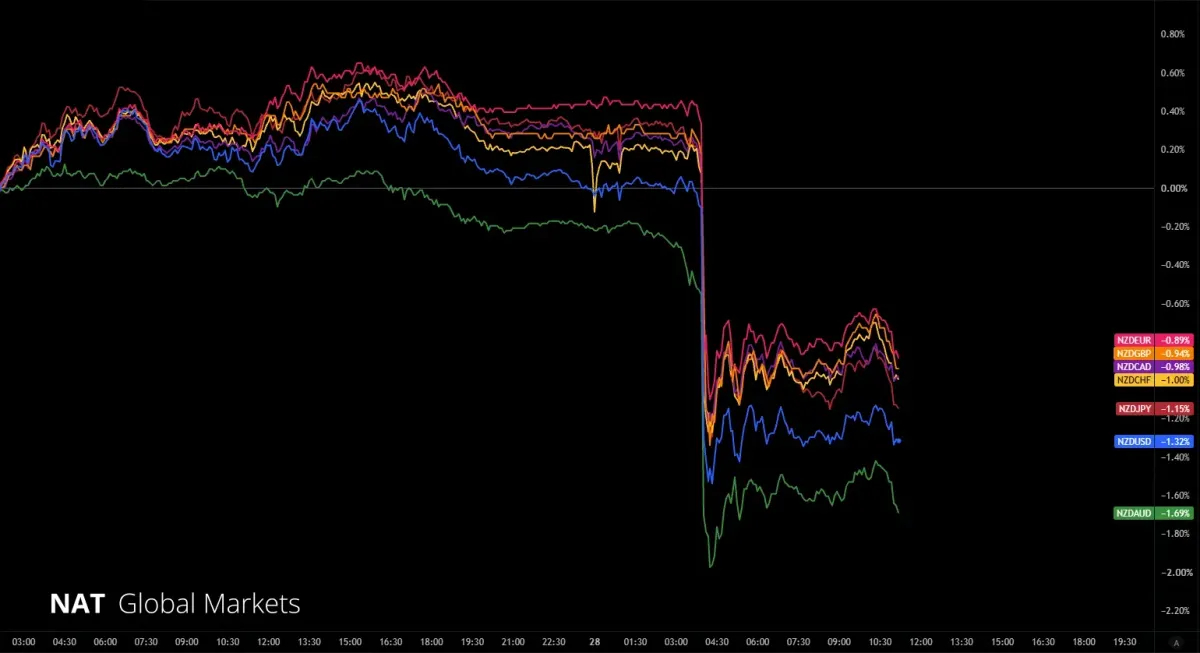
The Reserve Bank of New Zealand surprised markets by deciding to leave its official cash rate unchanged at 2.75%. The central bank chose to bide its time and carefully assess incoming macroeconomic data, global uncertainty, and the fragile domestic economic recovery. This decision triggered a sharp reaction in the foreign exchange market, sending the New Zealand dollar plunging by 1.47% from its local high. Speaking today after the announcement, RBNZ Governor Anna Breman noted in an interview with Bloomberg that the central bank still allows for further rate hikes at future meetings if inflationary pressure continues to build, with the next meeting scheduled for December 9.
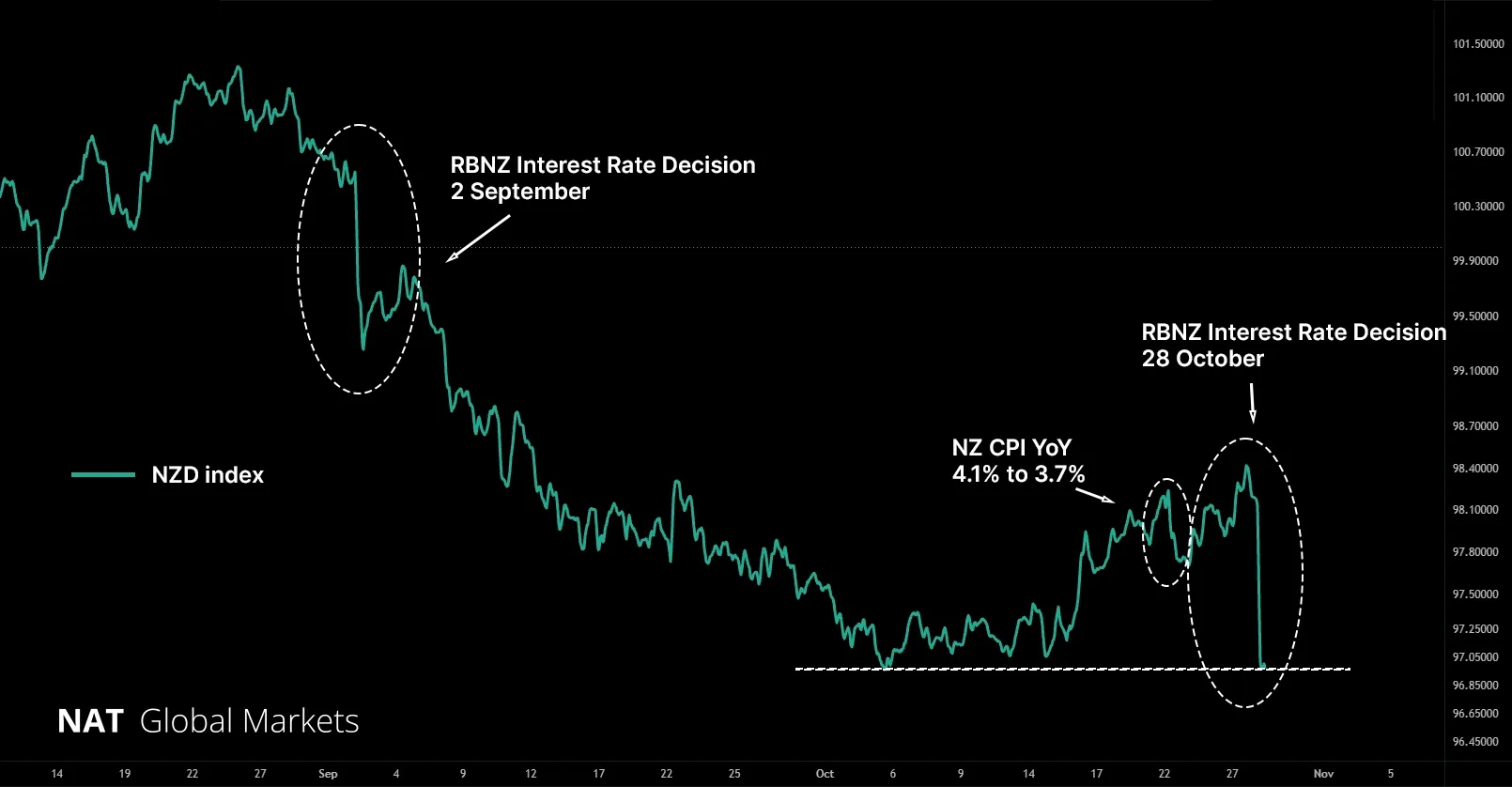
The previous drop in the New Zealand dollar occurred after the prior meeting on September 2, 2026. At that time, the central bank raised the rate to 2.75%, yet the New Zealand dollar still fell—according to our SFA Index Indicator, the decline reached 1.27%. The reason was a "dovish" accompanying statement that softened the risks of rising inflation. Following this statement and the initial correction, the New Zealand dollar entered a steady downward trend, losing 2.91% according to our index amid a strengthening US dollar.
The situation began to shift only in late October, when markets, ahead of the new meeting, once again priced in expectations of a rate hike while overlooking a crucial marker—the third-quarter inflation data released on October 22. At that time, the annual consumer price growth rate slowed from 4.1% to 3.7%, against a consensus forecast of 3.8%. Although inflation remained elevated, it came in slightly below expectations, prompting a sharp market reaction that pushed the New Zealand dollar index down by another 0.53%.
The current plunge of 1.47% in the New Zealand dollar following today's decision appears excessive; however, our indicator shows that the index is currently resting right on the support line from previous lows without breaking them. The momentum of the current sell-off has likely exhausted itself. Consequently, a recovery correction of the New Zealand dollar index upward by roughly another half a percent can be expected. The question of timing—whether this bounce will occur in the coming days or closer to the next meeting—remains open, but the market reaction itself is quite overdone, given that rate hike expectations persist, domestic inflation remains high, and official fourth-quarter data is still some time away.
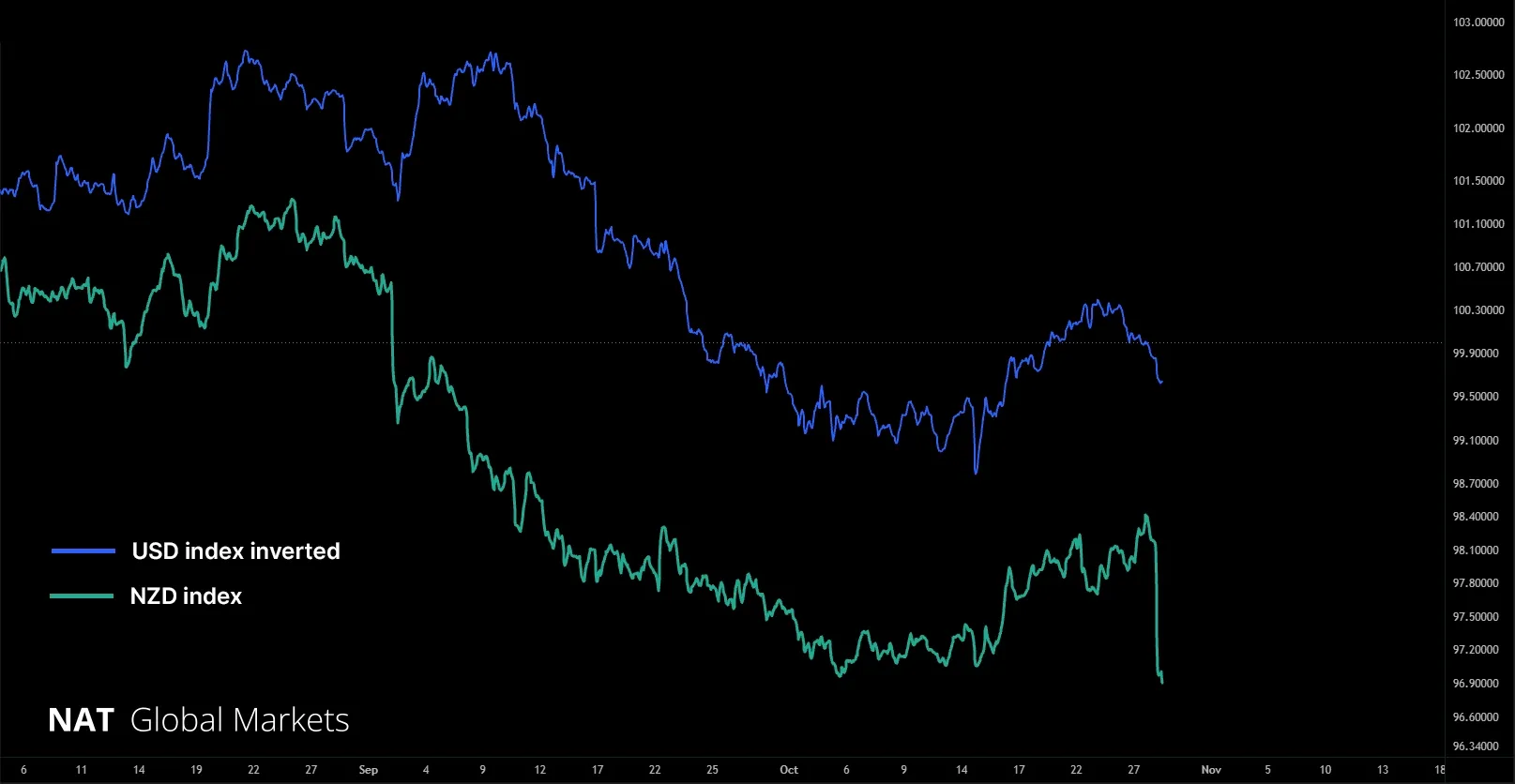
Until the next meeting on December 9, the New Zealand dollar will be increasingly subject to the influence of the US dollar due to their negative correlation. The US Dollar Index dictates the dynamics of the New Zealand dollar 80% to 90% of the time. Therefore, the future outlook for the Kiwi—whether it rebounds from this support level or breaks down lower—will depend on how the Federal Reserve delivers its stance at today's meeting. If today's meeting brings hawkish comments, the New Zealand dollar could sink even lower. If the market interprets today's Fed comments as dovish—that is, insufficiently hawkish—the New Zealand dollar could bounce back upward.
_________
Disclaimer: The materials on this website and in these publications are provided for informational and research purposes only and do not constitute individual investment advice. Please review the full text of our Disclaimer.