
Australian Dollar Falls After RBA Meeting, What to Expect Next?
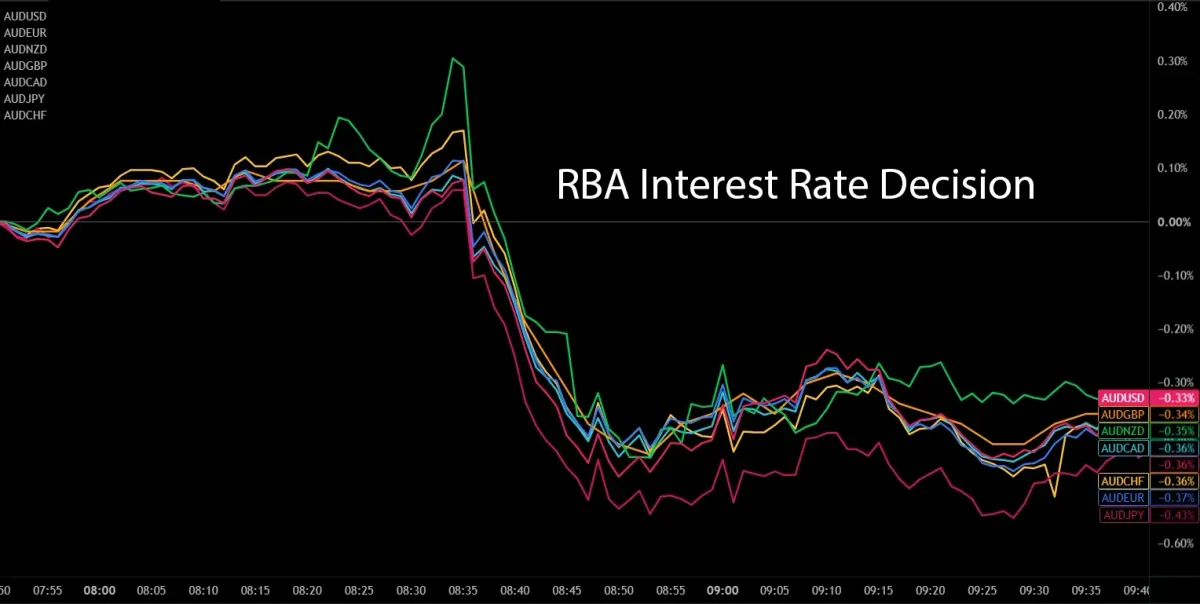
At its meeting on September 29, the Reserve Bank of Australia raised its key interest rate by 25 basis points to 4.6%. This is the fourth hike in 2026 and the highest rate since 2011. Following the meeting, the regulator emphasized that underlying inflation pressures were more persistent than expected, and current financial conditions were not sufficiently restrictive for the economy.
RBA Governor Michelle Bullock, at a press conference, noted that the current move was unavoidable, explaining that inflationary pressures were domestic and had persisted longer than expected. However, Bullock also stated that the current level would be restrictive enough to slow inflation dynamics.
Nevertheless, the regulator will not hesitate to raise interest rates again if necessary to reduce inflation.
The market responded by weakening the Australian dollar. On average, the AUD fell 0.3-0.4% against all currencies after the RBA press conference. The RBA raised the rate without waiting for tomorrow's inflation data release. This decision underscores the regulator's confidence that inflationary pressures have been strong and will continue. The consensus forecast for tomorrow's Monthly CPI Indicator (YoY) (Aug) is 4.1%, compared to 3.5% a month earlier.
The market widely expects inflation to rise; however, attention will be focused on the dynamics of the inflation structure. Market participants will look for clues regarding future trajectory, which will influence year-end rate expectations. Given the current market environment, the baseline forecast is one hike to 4.85%. A hawkish scenario would see two hikes to 5.1% in 2027. A dovish scenario assumes the current rate of 4.6% is the terminal rate for this tightening cycle. Therefore, if tomorrow's inflation data exceeds expectations and shows further economic warming, the market will price in a hike to 4.85% at the November meeting, which will push the Australian dollar higher after today's decline.
On the other hand, if inflation falls below the consensus of 4.1%, this will reinforce expectations that the tightening cycle is over and the Australian dollar will continue to decline against other currencies. The release of CPI data in line with the consensus will ultimately lead to a rise in the Australian dollar.
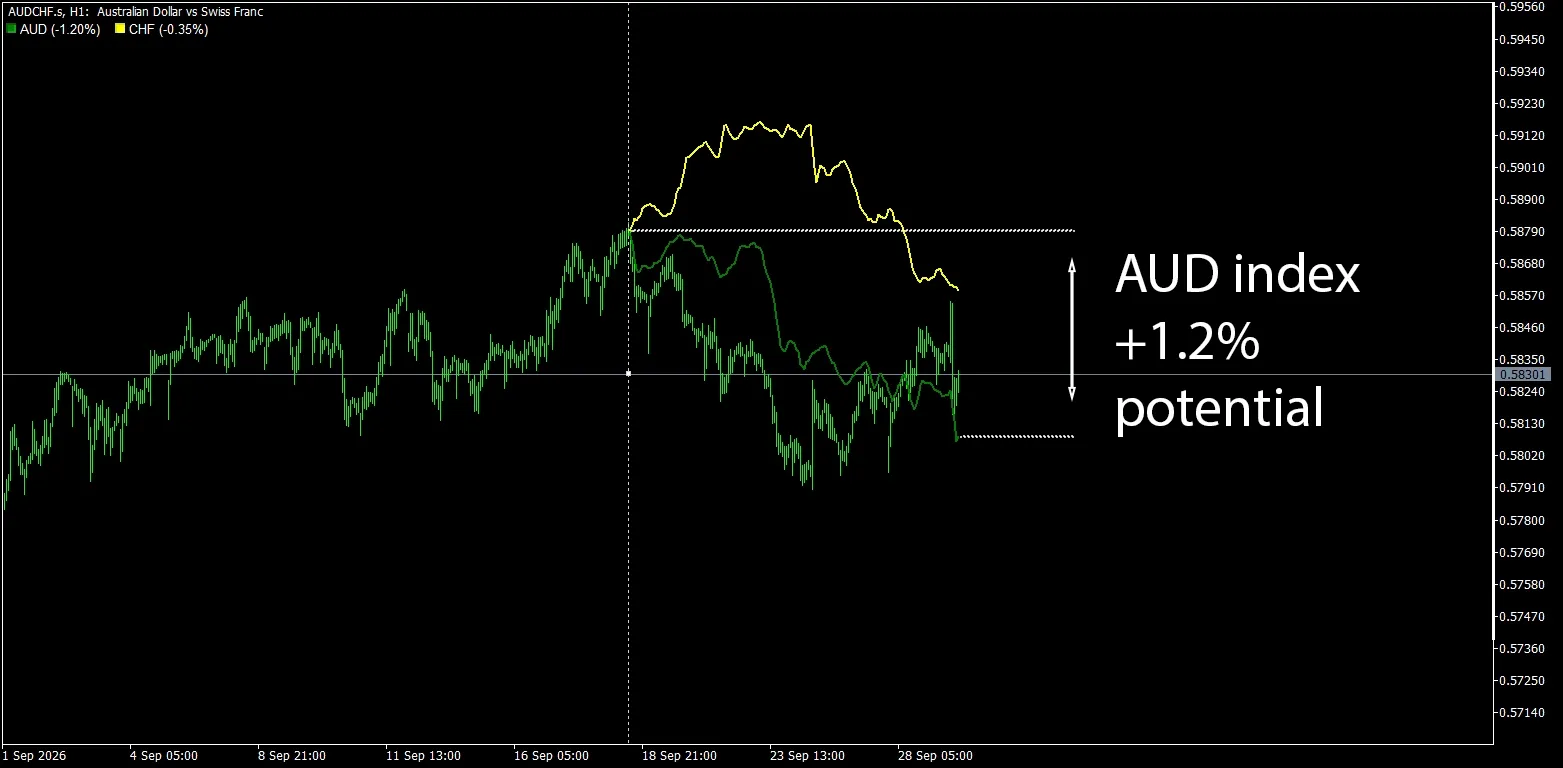
Based on this, the balance of risks still favors growth for the AUD in the medium term. This could lead to a recovery in the AUDCHF. The pair has declined from a peak of 0.58790 on September 18 to 0.58320 currently. According to the SFA Index, this decline was primarily due to a decline in the AUD index (due to position adjustment ahead of the RBA meeting and the inflation data release). However, the exchange rate was supported by weakness in the CHF. This means that the release of Australian inflation data at or above the consensus level, while the Swiss franc remains weak, will push the pair higher. On the other hand, the weakness of the CHF will prevent the pair from falling significantly if the inflation data is weak. Therefore, in the current market environment, long positions in the AUDCHF attractive after the release of Australian CPI, especially if a temporary dip occurs prior to the release.