
AUD pushes higher, though a pullback looks likely
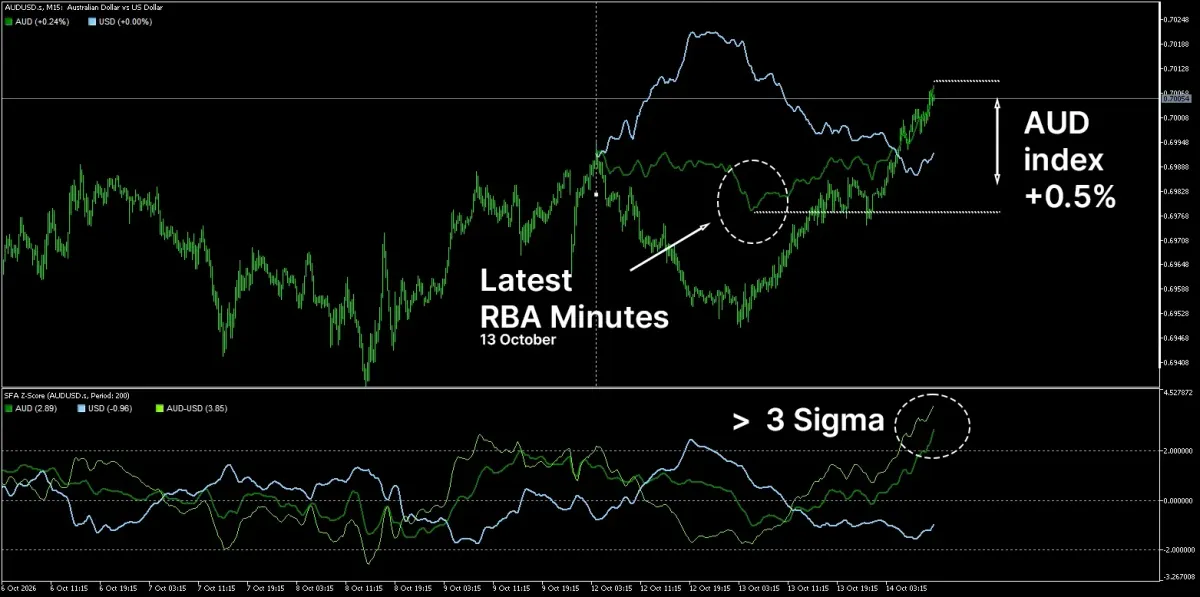
The Australian dollar is gaining strength this week. As shown by the SFA Index, the Aussie (green line) kicked off a steady rally right after the Reserve Bank of Australia released the minutes from its latest monetary policy meeting on October 13.
The minutes from the RBA’s September meeting revealed that the central bank is seriously concerned about accelerating inflation and stands ready to take a hawkish stance. The regulator highlighted three main pain points: spiking energy prices driven by the Middle East conflict, the global AI boom fueling demand for technology and commodities among key Asian partners, and an unexpectedly strong surge in domestic investment. Rather than seeing an economic slowdown, the central bank is facing a wave of robust business investment in new projects and data centers, which is straining the domestic capacity.
The published minutes were read as hawkish by the market. The regulator explicitly signaled that previous neutral rate benchmarks are no longer relevant, and that current financial conditions—despite rising mortgage pressures on households—may not be tight enough to cool off prices. RBA officials gave little to no weight to dovish scenarios or policy pauses, setting clear priorities: reining in inflation comes first, which directly points to further monetary tightening.
Meanwhile, the SFA Z-Score indicator signals that AUD is overbought, with the index pushing above the 3-sigma level (standard deviations) on the 15M chart (AUDUSD). Historically, this points to an impending stall or reversal in the current trend. Looking ahead to next week, PMI data scheduled for release on October 23 will offer fresh insight into Australia's economic activity. The S&P Global Manufacturing PMI already sits at 49.6 (below the 50.0 threshold), indicating a contraction in manufacturing. If the S&P Global Services PMI also points to a downturn, it could spark doubts about whether the RBA can keep tightening policy at the expense of economic growth. This scenario could pave the way for consolidation, a weaker Australian dollar, and a corrective pullback across AUD pairs.